












































































































































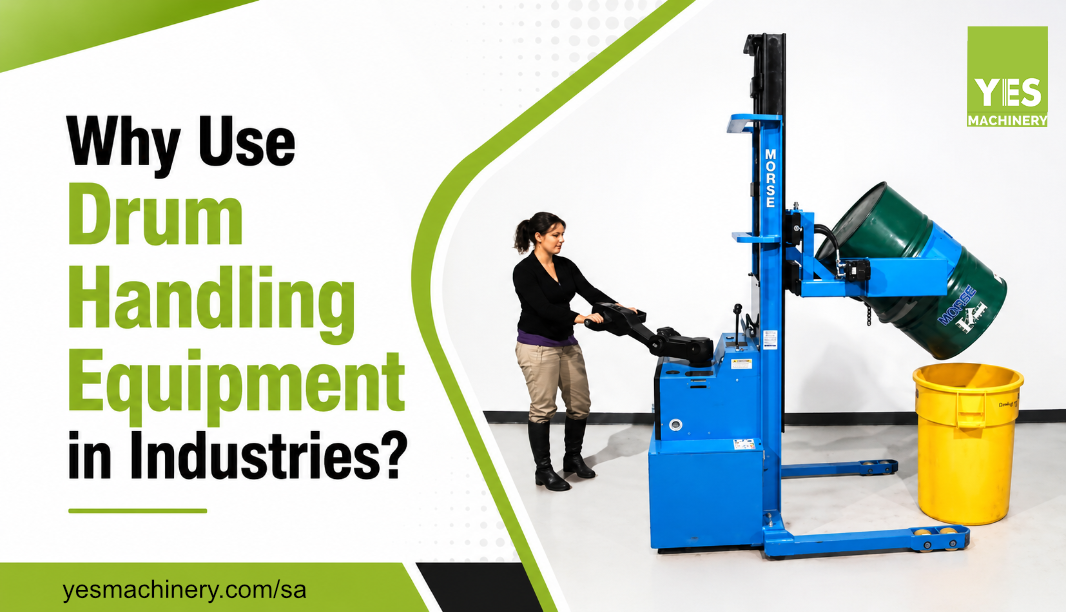
Why Use Drum Handling Equipment in Industries
- Category Machines
Heavy as they are on their stands, 55-gallon drums can be found everywhere from drug labs to refineries. Generally tightly sealed, they can carry very dangerous sludge, engine oils, and even things people consume. Across factories, chemical sites, storage yards, and energy fields, these containers are the linchpin for the movement of goods. When filled, most weigh between 400 and 800 pounds. Though they may look bulky because of their design, they are capable of carrying loads that very few other containers can match.
Back in the days, a lot of plants relied on manual ways. Staff members simply rolled, lifted, or parted drums to place them. Although this method might look like a cost-saving one at first, it has lesser known and quite often, severe side effects.
The Real Risks of Manual Drum Handling
Drum handling using manual operations exposes workers and firms to different serious risks. The main concerns can be summarized below:
In fact, untreated ergonomics issues related to handling drums manually are considered to be one of the major contributors to work-related musculoskeletal disorders (MSDs), back injuries, crush incidents, and spills that result in substantial costs.
OSHA in its guidance and enforcement actions often highlights improper material handling as among the top causes of major injuries in the general industry.
Key Benefits of Drum Handling Equipment
The machines are made to In particular eliminate these dangers and support a production increase. Here is why the leading plants are investing:
Better work environment safety
Mechanical protection grips that are secure, controlled lifting, and stable transportation are the primary sources of dropping accidents while at the same time lessening spill issues and worker injuries. That is, equipment is used to allow workers not to be exposed to the heaviest loads and awkward body positions.
Boosted productivity
Thanks to mechanical attachments one properly trained operator can move the lift stack or pour drums quickly and safely in only a fraction of the time it would take for a team to perform each feat manually. Besides, higher throughput (without hiring more individuals) due to faster cycle times.
Major cost savings
Quick ROI is a direct result of fewer injury claims, lesser insurance premiums, decreased product losses due to spills and less downtime. A great majority of establishments undergo a payback phase within 12-18 months.
Suitable ergonomics and higher employee morale
By limiting the physical stress of heavy lifting and awkward postures, companies are not only helping ensure the long-term health of their workforce, but also mitigating fatigue while enhancing job satisfaction - which leads to less turnover and more committed staff.
Simple regulatory compliance
OSHA ' s rules - 1910.120 (hazardous waste operations) and material handling general requirements - state that employers must provide appropriate equipment to greatly reduce the risk of injury. When drum spills occur, still maintain a citation-free status, and can defend their safety programs by using proper drum handling systems.
Popular Types of Drum Handling Equipment
There is a solution for nearly every use case and budget. The most used categories are these:
Basic Mobility
Drum Dollies, Carts & Trucks: These are excellent for transporting drums over smooth, even surfaces. They consist of straps or cradles that securely hold the drum, allowing one person to roll a heavy drum without the need to lift it. This is an inexpensive way to get started and is suitable for traveling short distances.
Manual & Drum Lifters & Stackers:
These devices help in raising drums vertically for stacking on pallets or racks, thereby eliminating overhead lifting by workers which is a risky operation. They vary from hand lever operated devices to fully powered electric or pneumatic units. They are available in manual and electric/air-powered models with capacities between 500 and 2,000+ lbs.
Drum Tilters & Rotators (Pouring, Mixing):
These machines are made to hold the drum securely and allow controlled tipping or complete 360-degree rotation, enabling accurate pouring, mixing, or dispensing without the physical handling of the drum by a worker. They essentially eliminate manual pouring strain and also reduce the chance of splash/spill.
Besides, forklifts are often equipped with drum clamps / attachments, vacuum lifters, or manipulators to handle high-volume or hazardous environments.
How to Choose the Right Drum Handling Equipment ?
Choosing the right solution is entirely dependent on the operational needs of your organisation. Consider these key factors:
Drum specifications — By size (30/55/85 gal), material (steel, plastic, fiber) and empty/full weight.
Frequency & Volume — How many drums do you want per shift Powered or automated systems may be warranted where the volume is high.
Environment — Indoor/outdoor, explosive atmospheres (need ATEX-rated or spark-proof), cleanroom requests.
Tasks Needed— Basic transportation, elevation lifting with limited pour or full rotation/mixing
Power Source — Manual – lowest cost, electric – most versatile compressor, pneumatic (for hazardous areas), or integrated with forklift.
Budget & ROI — Consider not just the purchase price but the savings from safety and productivity over time.
Conclusion: A Smart Investment in People and Performance
Drum handling equipment is much more than just a handy addition; it is a major pillar of a sustainable industrial operation today. By doing away with the risky manual work and introducing the specialized tools instead, a company is not only protecting its most valuable asset i.e. people, but it is also enhancing the working efficiency, cutting down the costs and quite possibly exceeding the safety standards.
Nowadays, when the safety of workers, ecological responsibility and productivity points are constantly the subject of discussions, the purchase of the right drum handling equipment can give one quite a few benefits from a competition point of view.
The first step is to have a look at the current working methods. Check where you have mishaps, inefficiencies or discontented workers. Then choose from a range of machines that are best suited to your type of drums and mode of functioning.
Do you want to enhance your output in drum handling? Then with no further delay, contact our team at YES Machinery!
Related Blogs
Search
Latest Blog
How Part Inspection Machines Help in Reducing Manufacturing Defects?
Benefits of Using Scissor Lifting Tables in Industrial Operations
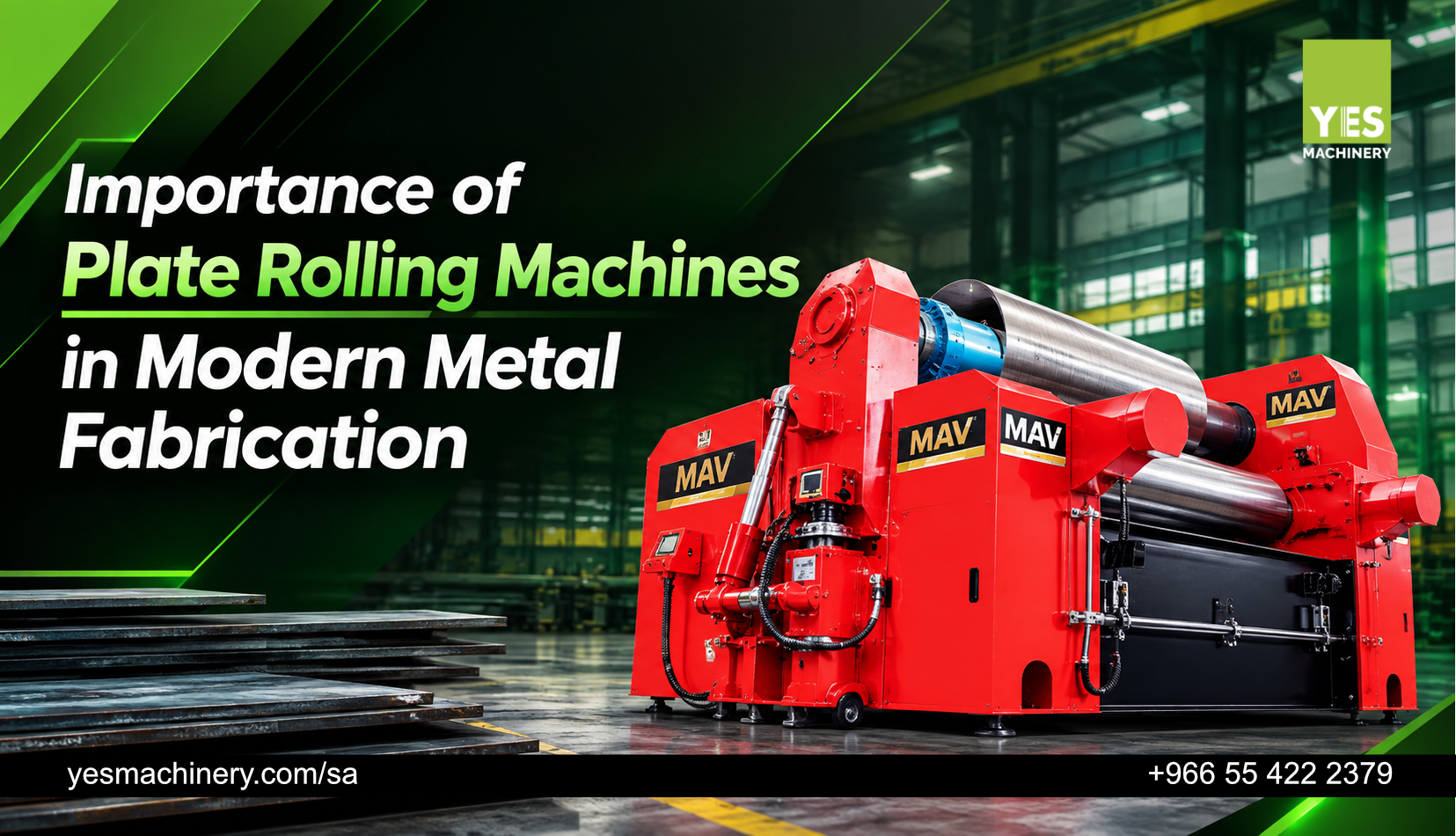
Importance of Plate Rolling Machines in Modern Metal Fabrication
Categories
- Assembly and Lean
- Cleaning Machines
- Cleaning Robots
- Cutting, Notching, Punching
- Edge Preperation
- Grinding Machines
- Industrial Vacuum Cleaners
- Lifting
- Lifting and Manipulation
- Machines
- Marking Solutions
- Metal Forming
- Metal Joining and Fastening
- Packing
- Parts & Consumables
- Pipe Handling
- Storage Solutions
- Sweeper Tool Carrier
- Vacuum lifting machine
- Warehousing and Storage
- Welding