

































































































































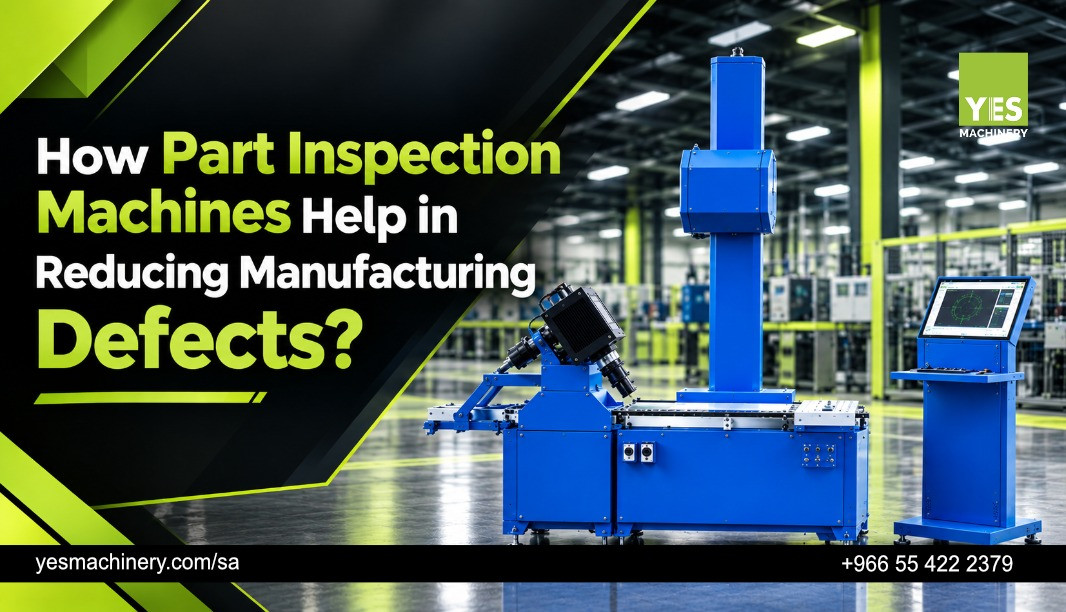
How Part Inspection Machines Help in Reducing Manufacturing Defects?
- Category Machines
Manufacturing organizations are always looking for efficient methods to ensure the quality of their products and reduce possible mistakes during ordinary production. Part inspection machines represent automated systems which allow scanning and measuring each element to eliminate possible errors before the end of manufacturing cycle. The below article explains in detail the principles of operation of these modern systems and highlights their importance for high-quality work in factories.
What Is a Part Inspection Machine?
A part inspection machine is an automated industrial equipment used for examining various manufactured parts in terms of their size, shape, surface condition and overall quality. Using special technologies, these devices can quickly analyze every item with the help of cameras, laser sensors and digital probes rather than the human eye. Such equipment is usually installed on the production line to help the workers detect faulty products and solve all problems in the production process.
Automated Vision Systems
The camera captures the image of each item moving along the factory conveyor. After that, a special computer program analyzes these images to detect the possible surface cracks, incorrect dimensions, missing holes and bad finish of colors.
Contact and Laser Probes
Using sensors which touch or scan the physical surface of components, this automated device allows taking precise measurements of the parts up to fraction of millimeters. These probes guarantee that all mechanical parts meet the initial design blueprint without any deviations.
Immediate Detection and Sorting
This machine automatically distinguishes faulty products from correct batches without disturbing the production process. Operators get instant notifications via digital display in case several consecutive defects are detected during the process of production.
Some Key Applications and Advantages of Part Inspection Machines
Early Discovery of Size Problems
Part inspection machines check the precise physical dimensions and shape of all parts immediately following their production from cutting, stamping, and molding equipment. Identifying problems in the early stages helps prevent operators from using incorrectly shaped parts during the assembly of large finished products further down the rapid manufacturing line. This immediate preventative measure saves a tremendous amount of valuable labor time and protects machines from possible jams throughout the entire factory floor.
Elimination of Operator Fatigue and Oversight
Operators can often become tired, bored, and distracted when inspecting thousands of identical parts for a number of hours on the job each day. Automated inspection systems are able to scan all parts with identical precision without ever suffering from any physical fatigue or loss of attention. This results in a much smaller number of defective parts going unnoticed and consistent quality of manufactured products on all operating shifts in the manufacturing factories.
Remarkable Saving of Raw Materials
Identifying faulty parts gives the factory employees an opportunity to prevent any defective machinery or mistakes in setup before all costly raw material stock gets spoiled. Manufacturers are not required to throw away tons of defective products since the machine immediately warns operators about any possible problems with the production process. These continuous safeguard measures help reduce waste piles and save raw industrial materials for the next manufacturing cycles.
Increased speed of production and increased quantity of manufacture
Manually inspecting parts takes additional time since workers must take additional time to examine each part thoroughly. Inspecting machinery is capable of analyzing hundreds of parts per minute without creating any annoying bottlenecks for high-speed conveyors in modern factories. The direct consequence of using such machinery is increasing the number of manufactured products per day without sacrificing quality standards of the factory.
Data recording and improvement of manufacturing processes
Such systems collect precise information on each component including measurements, defect type, and time when the part was created. Plant managers can use this information to identify problems with cutting tools, molds or poor materials from suppliers. Having this information makes it easier for engineers in the factory to improve performance of machinery and operations in the factory.
Reduced labor costs
Defective parts require labor for rework and additional quality checks. Using automated machinery decreases labor costs because the number of defective parts that should be removed from assembly lines will be significantly reduced. Manufacturing employees will be able to spend their time on more important things.
Guarding Against Costly Product Recalls
In case faulty items get past the factory gates, businesses suffer from dangerous product malfunctions, irate customer complaints, and costly product recalls. Inspection machines serve as a secure digital safeguard that ensures no substandard products get into the market at any point in time. Preventing large-scale product recalls ensures brand reputation protection while avoiding costly losses on behalf of emerging industrial manufacturing firms.
Unquestionable Compliance to Industry Standards
Strict industries like aerospace, automobile manufacturing, and medical devices demand strict compliance to tough manufacturing tolerances and industry standards. Inspecting machines provide a verified record of digital inspections that show compliance with all regulatory and legal standards that ensure each individual component is up to the mark. Complete digital records provide external regulators and commercial customers the assurance of safety of each production batch of goods.
Seamless Integration with Smart Manufacturing Systems
Contemporary inspection machines seamlessly integrate into factory automation systems and programmable logic controllers on the factory floor. Upon detection of frequent defects by the inspection machine, it can send signals to the upstream cutting machine to either stop or adjust its manufacturing processes. Seamless integration provides for a dynamic and responsive manufacturing environment that avoids costly errors before they propagate through other factory stations.
Improved Customer Trust and Customer Satisfaction
In commercial settings, the clients are always looking for products that will perform their duties perfectly right after coming out of the boxes, without any defects. Delivering orders promptly and with zero defects fosters healthy business relations and helps secure repeat contracts from loyal corporations around the globe. The use of current part inspection technologies makes it possible to turn good quality control into the competitive advantage of the company in today’s tough global market environment.
Conclusion
The use of part inspection machines is inevitable for every manufacturing facility which aims at producing products with zero defects in today’s world. With the help of such technologies, one can detect errors timely, avoid mistakes due to fatigue and collect useful information about the quality of the product. In other words, adopting the technology of automated inspection guarantees successful manufacturing of quality products and ensures competitiveness of the firm. To know more about these machines and/or to make a purchase contact our team at YES Machinery!
.
Related Blogs
Search
Latest Blog
How Part Inspection Machines Help in Reducing Manufacturing Defects?
Benefits of Using Scissor Lifting Tables in Industrial Operations
Importance of Plate Rolling Machines in Modern Metal Fabrication
Categories
- Assembly and Lean
- Cleaning Machines
- Cleaning Robots
- Cutting, Notching, Punching
- Edge Preperation
- Grinding Machines
- Industrial Vacuum Cleaners
- Lifting
- Lifting and Manipulation
- Machines
- Marking Solutions
- Metal Forming
- Metal Joining and Fastening
- Packing
- Parts & Consumables
- Pipe Handling
- Storage Solutions
- Sweeper Tool Carrier
- Vacuum lifting machine
- Warehousing and Storage
- Welding