










































































































































How Useful Are Pipe Welding Rollers in Today's Welding Operations?
- Category Welding
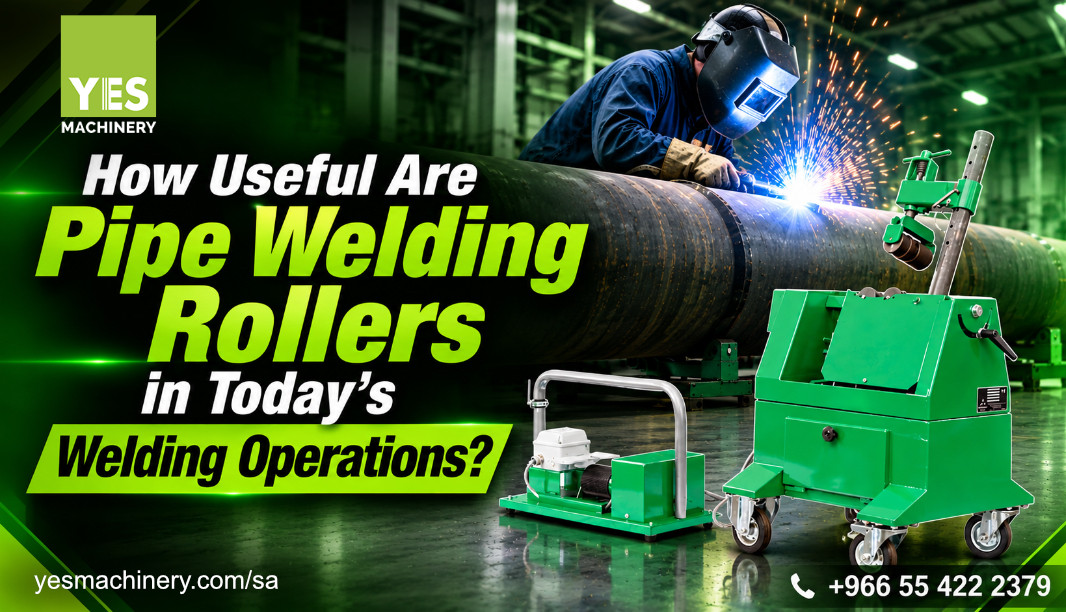
Pipe welding rollers provide invaluable assistance in rotating the cylindrical parts within fabrication shops. These specific turning tools help welders lay uniform seams without having to stop and manually reposition bulky pipes. The following detailed guide highlights the importance of pipe welding rollers as key tools that boost the effectiveness of workshops.
Key Takeaways
- Pipe welding rollers rotate round metal pipes easily, thus allowing welders to lay uniform seams from a stationary position.
- This tool saves the welders from exhaustion, stress, and potential dangers associated with heavy lifting at a shop floor.
- Constantly rotating the pipe keeps the weld seam in the horizontal position, resulting in better penetration and reduced welding flaws in structures.
- The use of pipe rollers helps save time in fabrication processes, reduces reliance on overhead cranes, and boosts profitability of commercial shops.
What Are Pipe Welding Rollers?
Pipe welding rollers are special machines whose aim is to facilitate rotating of pipes as part of activities including cutting, joining, and fitting. Rather than walking around large pipes or manual rolling of such pipes on the workbench, such machines rotate a tube at a steady pace. The process helps fabricators to develop a neat circular weld without having to move their welding torch to a favorable angle.
1. Drive and Idler Rolls
The basic design involves motor drive rolls that turn the pipe, while an idler roll holds the rest of the tube. The speed of drive units can be controlled using variable speed control to match deposition rate of the welding machine.
2. Polyurethane and Steel Wheel Construction
The wheels have a coating made of polyurethane to prevent stainless or aluminum pipes from contamination by dirt. Steel wheels are used for heavy carbon steel pipes which need high loading capacities and protection against hot welding slag.
3. Alignment and Center Adjustment
The wheels of modern roller machines are adjustable, such that they can open or close to support pipes of different diameters. It helps in ensuring that the tube rotates straight and does not sway when the welder performs his task.
Pipe Welding Rollers : Advantages and Operation Principle
1. Uniform Flat Downhand Position Welding
Flat position welding means that due to the gravitational force, the molten metal will flow smoothly without falling off. The motorized pipe rollers allow maintaining consistent position while welding by constantly turning all the pipe assembly, thus keeping the flame of the welding torch at twelve o clock position.
2. Greater Comfort of a Welder
Manual welding requires crouching in an unnatural position, as it is necessary to bend down under the pipe joints in order to reach them easily. Motorized rollers rotate pipe joints towards a worker, which allows remaining sitting or standing comfortably throughout the whole process.
3. Increased Production Efficiency
Stopping constantly in order to manually turn the heavy pipes leads to unnecessary loss of time during the daily routine work in a shop. Motorized rollers will provide a constant speed of pipe rotation that will match the wire feed speed and travel speed of a welder.
4. Minimizing Overhead Crane Usage
Transporting heavy pipes without special rollers means that overhead cranes will need to be rigged and set up constantly or helped out by other operators using forklifts. By placing the pipe on the specially made turning rolls, the overhead crane can perform other lifting operations in the shop. This also reduces the risk of any accidents involving dropped loads and damaged completed parts.
5. Perfect Automation and Robotic Welding
For an automated welding machine, it is essential that the workpiece moves smoothly and predictably in a circle to achieve quality welds. The motorized welding rollers coordinate perfectly with computer-controlled devices to maintain constant speed of rotation in all weld passes. This perfect coordination allows robots to perform flawlessly and prevent mistakes made by people.
6. Protecting the Surface of Pipes
Moving pipes on a rough steel table or concrete floor damages the surface by creating deep scratches and marks. Special rollers with durable polyurethane wheels provide gentle movement of delicate alloy pipes without any damage caused by carbon iron surface contamination. This protection of the smooth pipe surface is crucial in food processing plants and pharmaceutical industry piping networks.
7. Improved Weld Bead Appearance
Constant start-stop in manual welding often results in formation of uneven metal clumps, large craters and inconsistent appearance of final bead form. Constant rotation by the machine enables the welder to lay an even bead with ripples all along the joint. Welds become much cleaner and require very little grinding and satisfy critical commercial customers who inspect structural joints.
8. Flexibility for Different Diameters
Present-day pipe rollers come with easily adjustable frames, allowing to accommodate both small and thin pipes, as well as large industrial containers. The operator can easily widen wheel distance by changing positions of manual locks without requiring any special mechanical tools. This wonderful flexibility enables multi-purpose fabricating workshops to perform various commercial projects without purchasing several expensive specialized turning machines.
9. Prevention of Weld Defects and Rework
Out-of-position welding often leads to formation of slag pockets, heavy porosity and insufficient wall penetration of defects. Smooth rotation of the pipe keeps the weld puddle fully stable for successful non-destructive radiographic inspection test results. Avoiding any costly cut-outs and reworks saves valuable shop labor time and ensures positive project profitability.
10. Reduced Total Labor and Operating Cost
Lifting large diameter pipes through manual means can involve hiring another worker at the shop just for rotating the pipe manually. Roller systems can allow one worker to rotate the pipe and perform welding tasks efficiently through an easy-to-use foot pedal system. Reduction in workforce minimizes total labor cost while ensuring more important workshop activities.
Conclusion
Pipe welding roller systems are crucial pieces of machinery that help make difficult fabrication work on cylindrical pipes efficient, healthy, and easy. With the help of such machinery, the joint remains in the best possible flat position while rotation is performed automatically. The investment in quality pipe turning rolls from brands like YES Machinery allows any fabrication business to minimize its operating cost and maximize manufacturing capability.
Related Blogs
Search
Latest Blog
How Useful Are Pipe Welding Rollers in Today's Welding Operations?
How Industrial Workbenches Improve Productivity in Metal Fabrication Workshops
How Metal Tipping Containers Make Industrial Waste Handling Easier
Categories
- Assembly and Lean
- Cleaning Machines
- Cleaning Robots
- Cutting, Notching, Punching
- Edge Preperation
- Grinding Machines
- Industrial Vacuum Cleaners
- Lifting
- Lifting and Manipulation
- Machines
- Marking Solutions
- Metal Forming
- Metal Joining and Fastening
- Packing
- Parts & Consumables
- Pipe Handling
- Storage Solutions
- Sweeper Tool Carrier
- Vacuum lifting machine
- Warehousing and Storage
- Welding